Switch on a single ceiling pendant in a dark room and you can see everything, yet the room rarely looks its best. The corners fall away, faces are lit from above and the eye goes straight to the bulb.
Ambient lighting is the cure for that. It is the general, even light that fills a room so that you can move about in comfort, and it is the first layer of any lighting scheme, the one that reading lamps and picture lights are added to afterwards.
This guide explains what ambient light means, how it differs from natural light and from task and accent light, and how to add it to each room of the house, with examples from the lighting houses we sell.
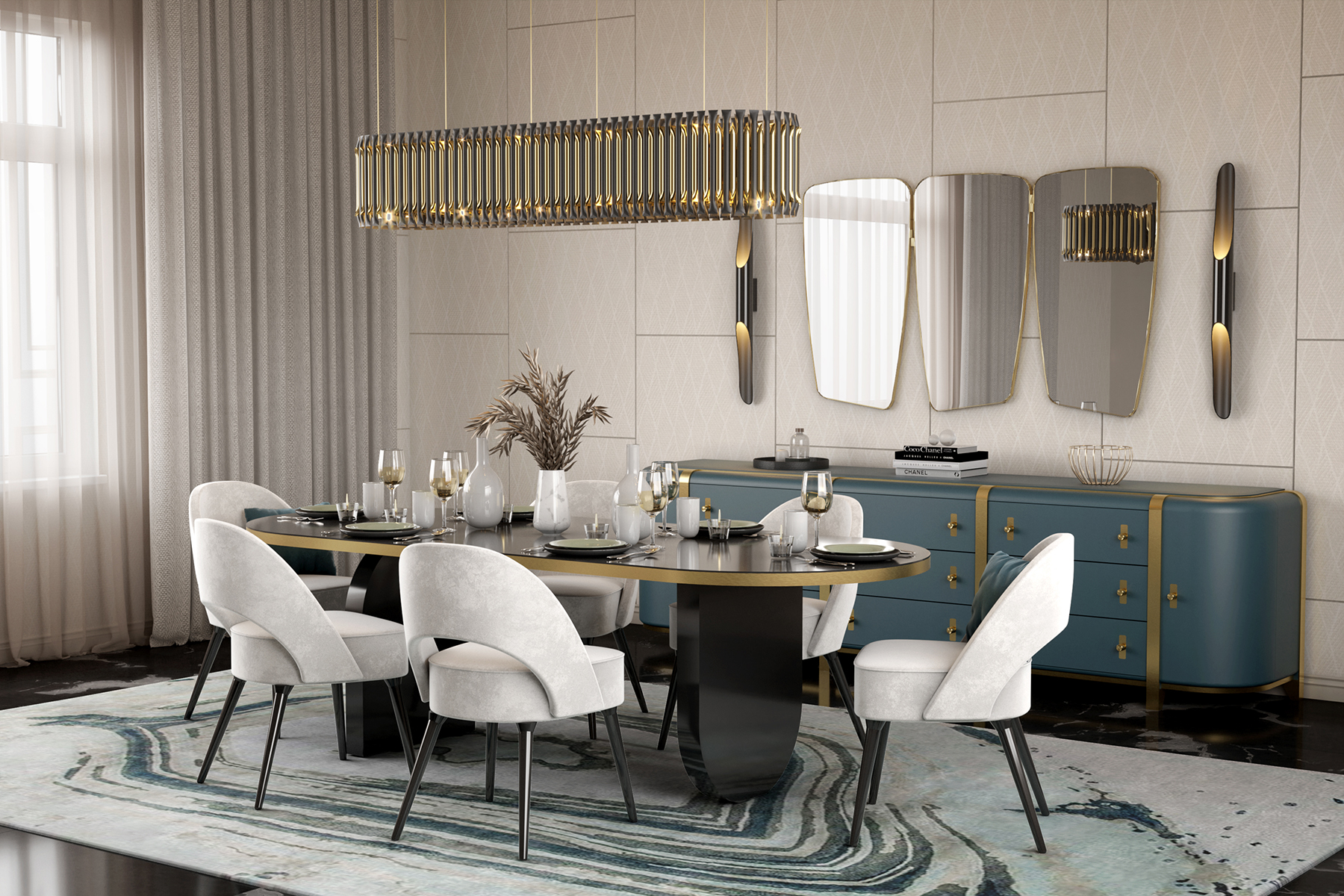
Feature image: the Matheny Snooker Suspension Lamp over a dining table. Image: DelightFULL.
What is ambient lighting?
Ambient lighting is the background light of a room: soft, evenly spread and without an obvious direction. You should notice the room, not the lamp. It is also called general lighting, because its job is general. It lets you cross the room, find the door and see who you are talking to, with few hard shadows and no glare.
Lighting designers usually plan a room in three layers, and ambient comes first. The lamp maker Ledvance describes ambient lighting as the most fundamental level in lighting design, the one that provides general illumination for the entire room. Task lighting then puts stronger light where you read, cook or work, and accent lighting picks out a painting, a shelf or a fireplace.
So the short definition is this. If a light exists to make the whole room usable and comfortable, it is ambient. If it exists to light one activity or one object, it is something else.
Ambient light meaning: direct and indirect
There are two ways to produce ambient light. Direct light shines straight from the fitting into the room, as a pendant, a chandelier or a row of downlights does. Indirect light is aimed at a ceiling or wall first and reaches you as a reflection, which is what an uplighter, a wall light or a strip hidden in a cornice gives you. The same Ledvance guide names these as the two main types and notes that in practice they are often combined.
Indirect light is the softer of the two, because the ceiling becomes the lamp. Direct light gives a room its sparkle. A scheme that uses only downlights tends to feel flat, and one that uses only uplighters can feel dim at table height. Most good rooms have some of each.
Ambient light and natural light are not the same thing
The two terms are often swapped, but they describe different things. Natural light comes from the sun. Ambient light is whatever light fills the room, whether it arrives through the window or from a fitting. On a bright afternoon the daylight is your ambient light. At six o’clock on a November evening it has to come from somewhere else.
That is why the electric layer matters even in a room with large windows. Daylight changes by the hour and by the season, and a scheme planned only for noon will fail at dusk. By day, a sheer curtain softens direct sun into something closer to an even glow, and a mirror opposite a window carries it further into the room.
Which lights give ambient lighting?
Almost any fitting can contribute, provided its light spreads and is not concentrated in one beam. These are the main kinds.
Chandeliers and pendants
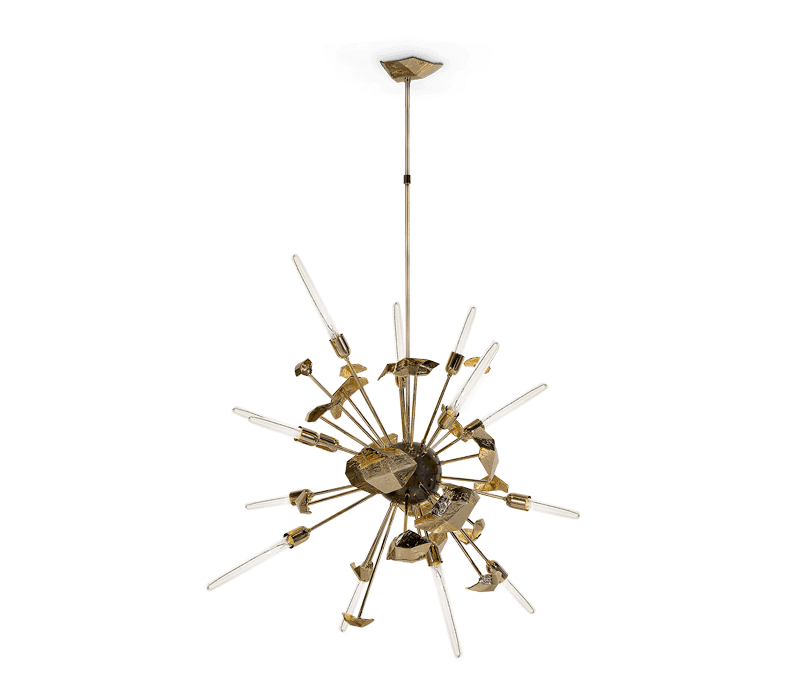
A central ceiling light is where most rooms start. A chandelier with many small sources spreads light in every direction, which is exactly what the ambient layer needs. The Supernova Chandelier by Boca do Lobo is an example on a large scale: bulbs radiate from a core of cast and gold-plated brass, in a piece 100 cm wide with a 150 cm drop. It needs a tall ceiling.
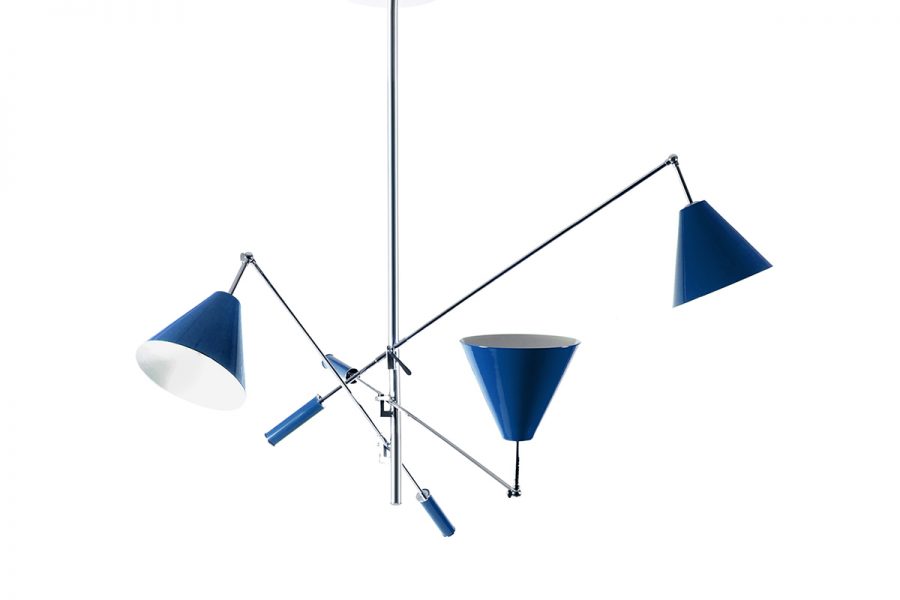
Where a room is long and narrow, a fitting with arms does more than a single pendant. The Sinatra Suspension Lamp by DelightFULL is handmade in brass with three aluminium shades on movable arms, and can be ordered with between one and five arms, so the light can be sent to the ends of the room. Its specification is three 6W E27 LED bulbs at 3000K.
Wall lights
Wall lights are the quickest way to stop a room depending on its ceiling. Placed at about head height on two or more walls, they wash the surfaces around them and fill the middle of the room by reflection. The Vivre Sconce by Koket sets a slice of amber agate in aged brass, 41 cm high. It is a decorative piece, but a pair either side of a chimney breast adds a useful low layer of glow. The Coltrane 1 Wall Lamp by DelightFULL is a plainer choice: a steel fitting in matte black and gold that takes two 4W GU10 LED bulbs.
Floor and table lamps
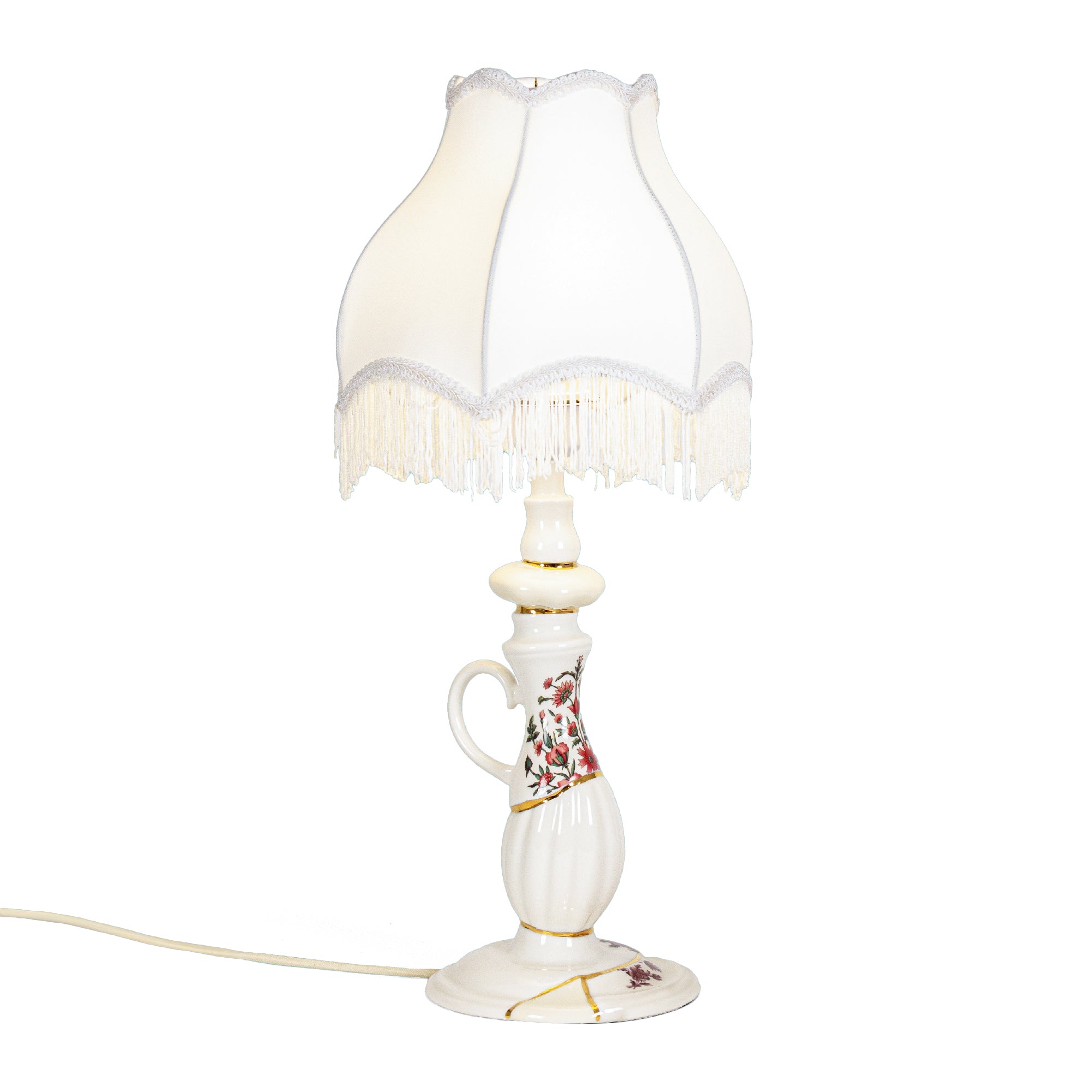
Lamps add ambient light at the height where people sit, and they need no rewiring. A fabric shade matters here, because it turns a bare bulb into a wide, soft source. The Kintsugi Abat-Jour Dimmable Lamp from Seletti is a 60 cm porcelain table lamp, mended with gold lines in the Japanese manner, under a fringed fabric shade. It is 26 cm across, a size for a side table or a console, and its listing describes it as dimmable.
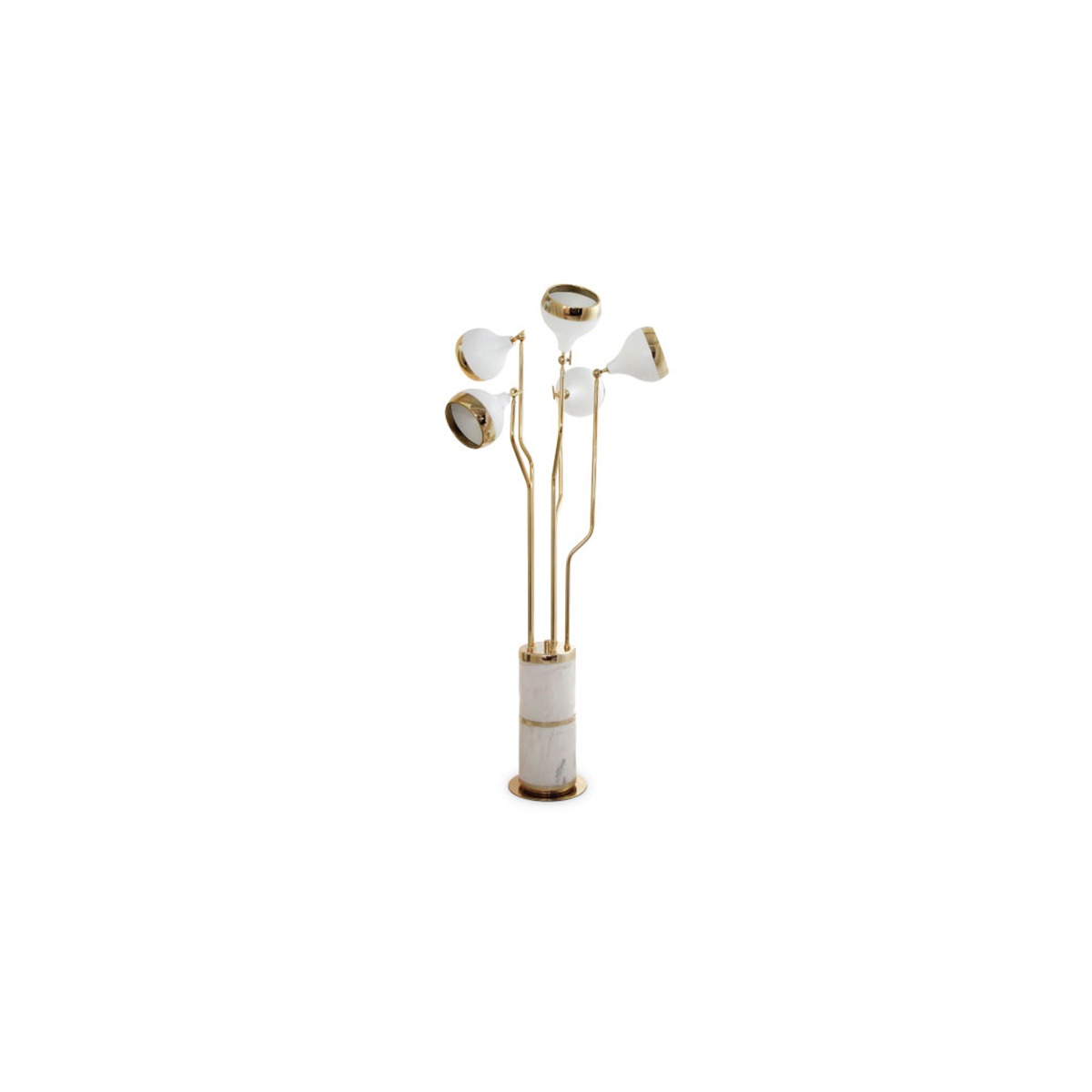
A floor lamp with several heads can do the work of a ceiling fitting in a room that has none. The Hanna Floor Lamp, also by DelightFULL, carries five brass and aluminium shades on an Estremoz marble base, each one adjustable, so some can be turned to the ceiling for indirect light and others towards a chair.
How to add ambient lighting, room by room
Living room
The living room is used for more things than any other room, so its general light has to change through the day. Plan for at least three sources at different heights: one overhead, one on the walls or shelves, one or two lamps beside seating. Put the overhead light on a dimmer. In the evening, turn it down and let the lamps carry the room. Keep the colour of the sources consistent. The five bulbs of the Hanna Floor Lamp and the three of the Sinatra Suspension Lamp are all specified at 6W and 3000K, so the two can share a room without a visible change of tone. For brightness, the government guide quoted below gives about 470 lumens for an old 40 watt bulb and about 1,520 for a 100 watt one, which is a useful scale when you add up what a room has.
Bedroom
A bedroom wants the gentlest version. Choose shaded or frosted fittings so that no bare bulb is visible from the pillow, and keep the colour warm. A central light for dressing and cleaning, plus a shaded lamp on each side of the bed, is enough for most rooms. Dimming matters more here than anywhere: low before sleep, full when you are looking for a sock. On the bulb box, look for a rating of around 2700K, the figure the UK government’s guide gives for warm looking light. The Kintsugi lamp above is listed as dimmable, and at 60 cm high it needs a bedside table with some room on it.
Kitchen and dining room
Kitchens need strong task light on the worktops, but task light alone leaves the rest of the room in shadow. A run of ceiling lights or a large pendant supplies the general layer. Over a dining table, a chandelier hung low and dimmed gives ambient light for the meal and becomes the centre of the room. Keep it on a separate switch from the worktop lights. The Matheny Snooker Suspension Lamp by DelightFULL, shown at the top of this guide, is made for a long table: a brass fitting of joined tubes that carries 24 G9 LED bulbs of 4W each at 3000K. Its listing gives those bulbs as non dimmable, so check that point on any fitting before you plan a dimmer around it. For the ceiling, the government guide calls LEDs an excellent replacement for halogen downlighters and other spotlights.
Hallway and stairs
Halls are narrow and often have no window, so the light should reach the walls and not only the floor. A pendant with an open or translucent shade, or a pair of wall lights, makes the space feel wider than a single downlight does. On stairs, check that the fitting does not shine into the eyes of someone coming down. In a narrow passage, check how far a wall light stands out before you buy. The Vivre Sconce, for instance, projects 10 cm. LED bulbs also suit a space you cross in seconds, because, as the government guide notes, they reach full brightness immediately.
Bathroom
Bathrooms come with safety rules. The charity Electrical Safety First advises that enclosed ceiling lights are preferable to ones that hang down, and that any fitting that is not enclosed should be out of reach of someone using, or still wet from using, the bath or shower. It also prefers a ceiling-mounted pull-cord switch to an ordinary wall switch, because of dampness and wet hands. In practice that points to a flush, enclosed ceiling fitting for the general light, with decorative pieces kept for the dry rooms of the house. Ask a qualified electrician which fittings are allowed where before you buy.
Bulbs, colour temperature and dimmers
The bulb decides how the ambient layer feels. Colour temperature is printed on the box in kelvin. The UK government’s buyer’s guide to home lighting says that warm looking bulbs normally have a rating of around 2700K, and that bulbs of around 4000K to 6000K look colder. For living rooms and bedrooms, stay at the warm end. The DelightFULL pieces above are specified at 3000K, which is still warm.
Brightness is measured in lumens, not watts. The same guide gives about 800 lumens as the equivalent of an old 60 watt bulb. Add up the lumens of every source in the room, not only the ceiling light, because the ambient layer is the sum of them all.
A dimmer is the cheapest improvement you can make to ambient light, because it lets one room serve morning and evening. The guide notes that most LED lighting works with dimmer switches, and adds a caution: check the box. Not every LED bulb is dimmable, so check the bulb and the dimmer together. Have hardwired fittings and new switches installed by an electrician.
Ambient lighting: questions and answers
What is the meaning of ambient light?
In a home, ambient light means the general light that fills a room, from any source. It is soft, even and has no strong direction. In photography and film the phrase means the light already present in a scene before the photographer adds any.
What is an example of ambient lighting?
A chandelier in the middle of a sitting room, a pair of wall lights in a hall and a shaded lamp on a side table are all examples. So is daylight through a net curtain.
What is the difference between ambient, task and accent lighting?
Ambient lighting lights the whole room. Task lighting lights an activity, such as reading or chopping. Accent lighting lights an object you want noticed. The same fitting can change role: a pendant in the centre of a room is ambient, and the same pendant hung low over a desk is task light.
What are the two types of ambient lighting?
Direct and indirect. Direct light travels straight from the fitting into the room. Indirect light is bounced off a ceiling or wall first, which makes it softer.
What colour temperature is best for ambient light?
For rooms where you relax, a warm white of around 2700K to 3000K. Bulbs rated 4000K and above look cooler and suit places where you want to feel alert.
Is ambient lighting the same as mood lighting?
Not quite. Ambient lighting is the base layer that makes a room usable. Mood lighting is what you get when that layer is dimmed and the lamps and accents take over. A room needs the first before it can have the second.