
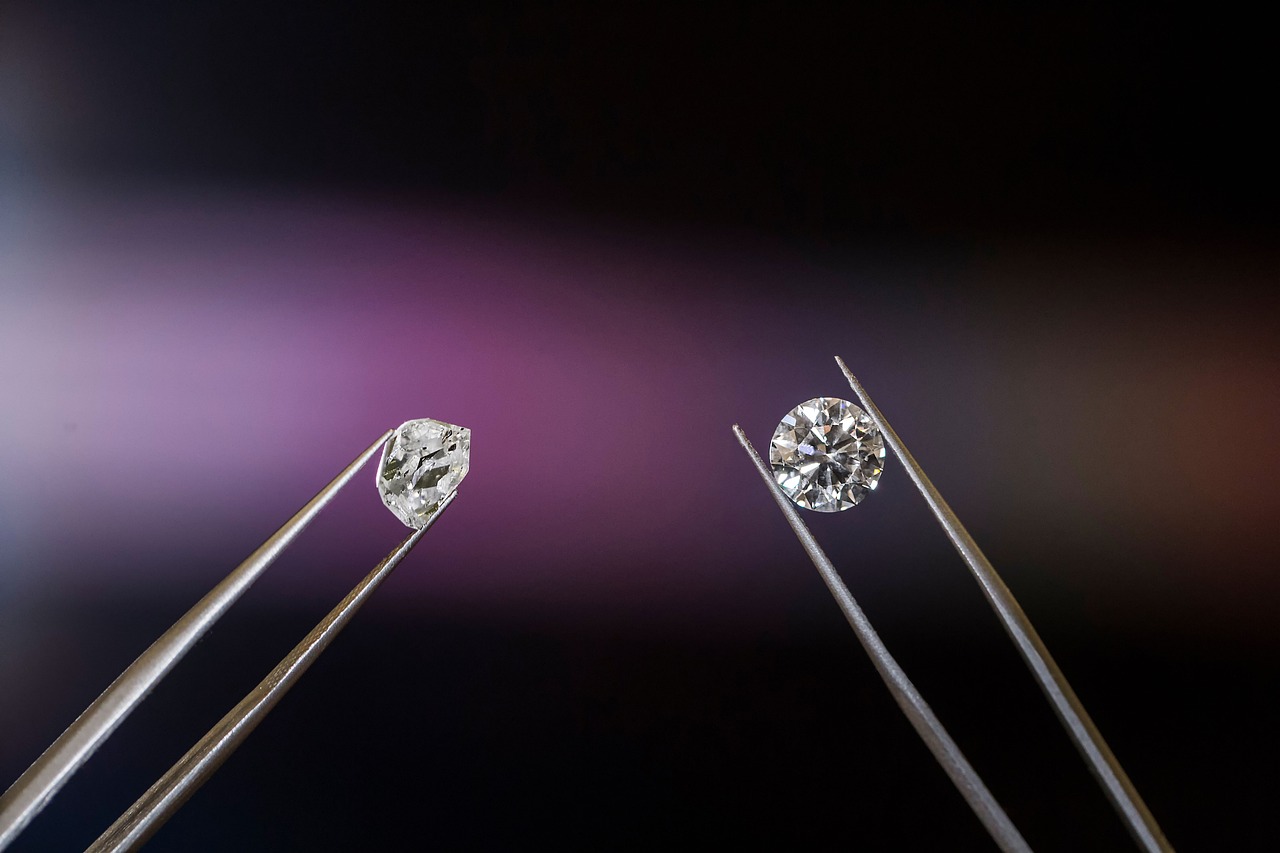
In recent years, there has been a great deal of discussion and interest in lab-grown diamonds, especially among industry executives. In 2022, the lab-grown diamond category with less than two carats held the most market share. More than two-thirds of the money generated by the lab-grown diamond market worldwide came from it. In the market for wedding and engagement rings, these are quite well-liked.
The capacity to create diamonds that are virtually exact replicas of their natural counterparts advances along with technology. Many industry experts perceive lab-grown diamonds as more than simply a scientific wonder. They see them as a priceless gift. Some may see lab-grown diamonds as a fad or an alternative to real ones.
In this article, we will look at why industry leaders think so highly about lab-grown diamonds and consider them as a precious gift.
Sustainable and Ethical Sourcing
The fact that lab-grown diamonds support moral and sustainable business practices is one of the main reasons they are so highly regarded. The diamond business has long faced criticism for its links to human rights violations and environmental damage. This is especially true in regions where there is exploitation or conflict.
According to an ABC News article, producing one carat of mined diamond requires disturbing 100 square feet of land. In contrast, producing similar lab-grown diamonds affects only 0.07 square feet of land.
The disturbed land and the mining processes further impact the lives of the miners and the people staying nearby. For instance, a similar incident occurred in the Kono district of Sierra Leone in West Africa. The entire community was facing challenges due to the mine situated close to it.
Following the incident, The Mines and Minerals Development Act 2022 was enacted by the Sierra Leonean Parliament to improve the welfare of the community.
Diamonds created in laboratories provide an alternative to mining. These diamonds are produced in controlled surroundings with a negligible ecological effect, as opposed to relying on the extraction of minerals from the ground.
Leaders in the industry are paying more and more attention to sustainability and corporate responsibility. The trend toward lab-grown diamonds is consistent with these ideals and presents the adopting businesses as progressive and socially conscious.
Additionally, buyers become more aware of the effects of their choices, and lab-grown diamonds provide a guilt-free choice without sacrificing quality. Businesses are encouraged to adopt lab-grown diamonds as part of a larger push toward sustainable luxury due to the rising customer demand.
As stated by Grown Brilliance, lab-grown diamonds help solve the following ethical issues associated with natural gemstones:
- Avoid any political conflict
- Prevent resource use issues, both land and human
- Provide traceable sourcing and certification
- Do not require humans to work in harsh conditions
How are lab-grown diamonds sustainable?
Since labs are used to create lab-grown diamonds, there is no air or water contamination associated with them. These labs generate garbage, which is recycled and disposed of in an eco-friendly manner. The laboratories that create diamonds consume very little energy and produce minimal emissions.
A Technological Marvel
Leaders in the business also applaud lab-grown diamonds because of the science involved. Modern technology is used to generate these diamonds, imitating the natural processes that take place deep below the ground.
Scientists can mimic the conditions that generate natural diamonds using two main techniques:
- Chemical Vapor Deposition (CVD)
- High-Pressure High Temperature (HPHT)
In 2022, the market for lab-grown diamond manufacturing was dominated by the CVD sector. According to an Allied Market Research report, the CVD manufacturing process is estimated to be the key driver of the industry growth. It is expected to show the highest CAGR growth in the entire lab-grown diamond sector.
The end product of these processes has all the properties of a mined diamond, including chemical and physical similarities. This accomplishment is the union of science and art that makes carbon one of the most sought-after materials in the world.
Industry leaders see lab-grown diamonds as evidence of human resourcefulness and science’s ability to resolve significant issues. The recognition of the technological innovations that enable these diamonds contributes to their standing as a “precious gift.”
What is the chemical vapour deposition of diamonds?
A thin “seed” diamond is heated to a high temperature (about 800°C) within a sealed chamber during chemical vapour deposition. Subsequently, a gas mixture rich in carbon is added to the chamber, typically consisting of hydrogen and methane.
Cost-Effectiveness Without Compromising Quality
The affordability of lab-grown diamonds is another alluring feature. Since real diamonds are rare and expensive to mine and distribute, the traditional diamond business has a long history of high pricing. On the other hand, lab-grown diamonds can be made more cheaply, which makes them more affordable for a wider spectrum of customers.
Moreover, the price of these artificial diamonds is falling further with technological advancements. As noted in Instoremag.com, the price of a carat lab-grown diamond, which used to be around $800 in 2018, is now only $500. And when it comes to diamonds, it is usually about the price for the buyers. Customers prefer getting a lab-grown diamond that they can get at less than half the price of natural gemstones.
Customers who were previously priced out of fine diamond purchases now have an affordable alternative that maintains durability and quality. For business executives, this means exploring new markets and reaching a larger clientele without being constrained by the limited supply of natural diamonds. Given their unwavering quality and cost, lab-grown diamonds are a wise and sensible option in the current market.
Customization and Creativity
The jewellery industry’s creative options have been further enhanced by lab-grown diamonds. These diamonds provide greater versatility in terms of size, colour, and clarity since they can be developed in controlled settings. With more control over the properties of the diamonds they deal with, jewellers can now produce bespoke designs.
Those who want to push the limits of creativity will find this ability to customize diamonds to meet their demands very interesting.
Leaders value the creative flexibility that lab-grown diamonds offer since it enables them to present their customers with custom, one-of-a-kind items. This degree of personalization appeals to customers and supports the notion that lab-grown diamonds are an important medium for artistic expression.
Redefining Luxury and Rarity
Since it is commonly believed that scarcity equals value, the luxury associated with diamonds has always been linked to their rarity. Lab-grown diamonds, on the other hand, refute this idea by demonstrating that luxury is about quality, innovation, and sustainability in addition to rarity.
While lab-grown diamonds are changing the definition of luxury ownership, real diamonds will always have a certain appeal. However, when it comes to clarity and transparency, lab-grown gemstones have the upper hand.
This tendency is now frightening many premium companies and actual diamond merchants. The absence of nitrogen in the lab-grown ones makes them clearer. However, because of their origin, mined ones have a yellowish hue.
Do celebrities buy lab-grown diamonds?
In recent years, a growing number of celebrities have selected lab-grown diamonds for their wedding and engagement rings. This change is mostly due to the ethical and environmental issues surrounding lab-created diamonds.
Lab-grown diamonds signify a change in values within the diamond business rather than merely being a new commodity on the market. Business leaders are realizing the value of ethical, environmental, and cutting-edge approaches to luxury by accepting lab-grown diamonds. They saw lab-grown diamonds as a gift for the next generation as well. The GenZ and millennials now stand to gain from a more ethical and open approach to premium products.